
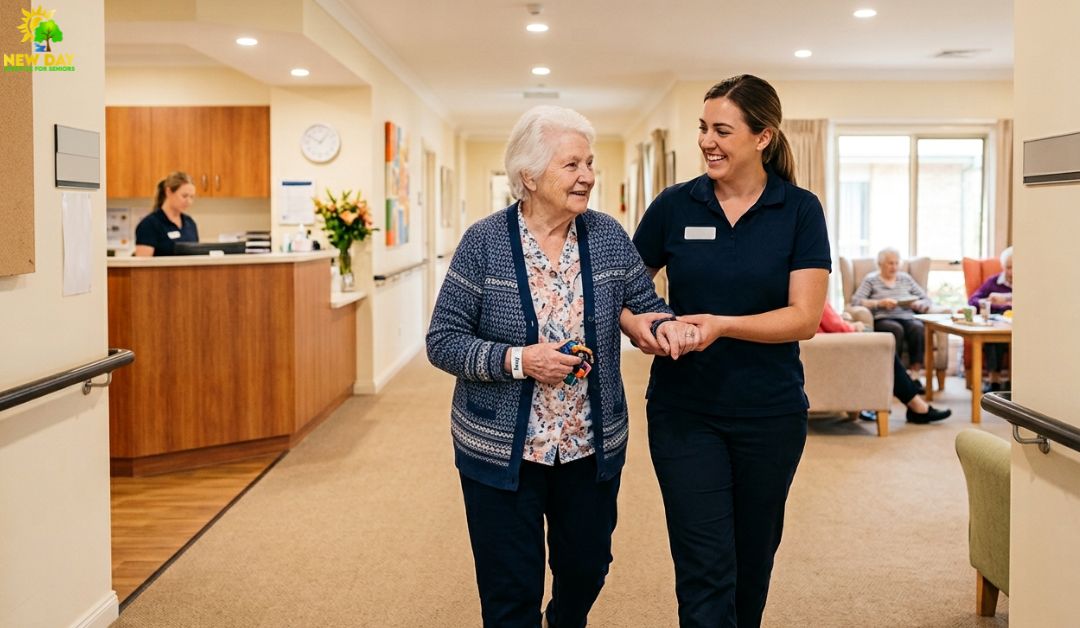
Navigating a progressive cognitive diagnosis is one of the most emotionally challenging journeys a family can experience. As condition progression makes simple household tasks overwhelming, safety risks at home inevitably multiply. Families frequently find themselves asking: How can we protect our loved one’s physical safety without stripping away their dignity, comfort, and sense of purpose?
Memory Care for Dementia provides a dedicated, person-centered answer. It is a specialized form of long-term residential support specifically engineered for individuals experiencing progressive cognitive decline. By pairing secure architectural layouts with structured daily schedules and specialized cognitive therapies, memory care transforms daily confusion into security, predictability, and genuine engagement.
Here is a detailed look at how memory care communities support seniors with dementia, and how structured memory care planning gives family caregivers invaluable peace of mind
How Does Memory Care Help Dementia Patients? Core Pillars of Care
Understanding how memory care helps dementia patients requires looking at the foundational pillars that separate memory care from standard residential living. Standard home environments and general senior facilities are rarely equipped to handle the complex behavioral patterns and physical safety risks associated with progressive memory loss.
1. 24/7 Security and Wandering Prevention
Safety concerns are often the primary catalyst for seeking specialized care. According to the Alzheimer’s Association, over 60% of individuals with cognitive decline will wander at least once, creating life-threatening risks. Dementia memory care environments feature keypad-secured perimeters, enclosed sensory courtyards, and silent monitoring systems. These elements prevent elopement while granting residents the freedom to walk and explore independently within a safe setting.
2. Intentional Environmental Design
Architecture in specialized dementia care communities is purposefully designed to lower stress and assist with spatial orientation:
- Circular Walkways: Eliminates dead-end hallways that cause frustration, pacing anxiety, and confusion.
- Visual Cues & Memory Boxes: Color-coded hallways and personalized shadow boxes outside bedroom doors help residents identify their private spaces easily.
- Circadian & Soft Lighting: Reduces harsh glare and shadows that can trigger late-afternoon disorientation, commonly known as sundowning.
3. Dedicated Assistance with Activities of Daily Living (ADLs)
Caregivers trained in gentle redirection assist residents with essential tasks such as bathing, dressing, personal grooming, and dining. Staff members approach every interaction with patience and dignity, ensuring residents never feel rushed or embarrassed.
Specialized Dementia Care vs. Assisted Living vs. In-Home Care
Selecting the optimal care setting requires understanding how care models differ in terms of safety, clinical oversight, and specialized programming.
| Care Aspect | In-Home Care | Standard Assisted Living | Specialized Memory Care |
| Primary Focus | Hourly personal care & household support | Supporting independence with basic daily help | Specialized care for dementia & cognitive decline |
| Supervision Level | Scheduled shift hours | Periodic check-ins; on-call staff | Continuous 24/7 oversight & monitoring |
| Physical Security | Standard home locks & residential alarms | Standard building security | Secured perimeters, anti-wandering technology, enclosed yards |
| Staff Training | Varies by individual care agency | Basic caregiver certification | Advanced dementia training, validation & redirection techniques |
| Daily Routine | Unstructured or dependent on family | Independent / Optional social events | Highly structured, predictable, dementia-focused routines |
| Cognitive Therapies | Limited to family or aide initiative | General social activities & crafts | Reminiscence, sensory, art, and music therapy programs |
Determining the right care setting comes down to evaluating whether a loved one needs basic help or dedicated wandering protection. Comparing assisted living and memory care helps families identify which environment matches their current safety needs.
Key Benefits of Memory Care for Seniors With Dementia
The primary objective of dementia care for seniors extends far beyond basic physical supervision; it focuses on maximizing daily quality of life, preserving identity, and nurturing remaining cognitive strengths.
1. Slowing Functional Decline Through Brain Stimulation
Consistent mental, physical, and sensory engagement keeps neural pathways active. Structured cognitive exercises, memory-retrieval activities, and gentle movement classes help maintain cognitive function for as long as possible.
2. Reducing Behavioral Stress and Sundowning
Agitation, anxiety, and late-day distress often stem from overstimulation, physical fatigue, or an inability to communicate unmet needs. Predictable daily schedules, calm dining settings, and quiet sensory rooms drastically lower distress and minimize the reliance on sedative medications.
3. Restoring Family Relationships
Caring for a parent or spouse with progressive memory loss frequently results in physical exhaustion and emotional burnout. The memory care benefits for dementia patients extend directly to the family, allowing adult children and spouses to step back from full-time caregiving duties and return to their primary roles as loving family members.
What Programs Are Offered in Dementia Memory Care?
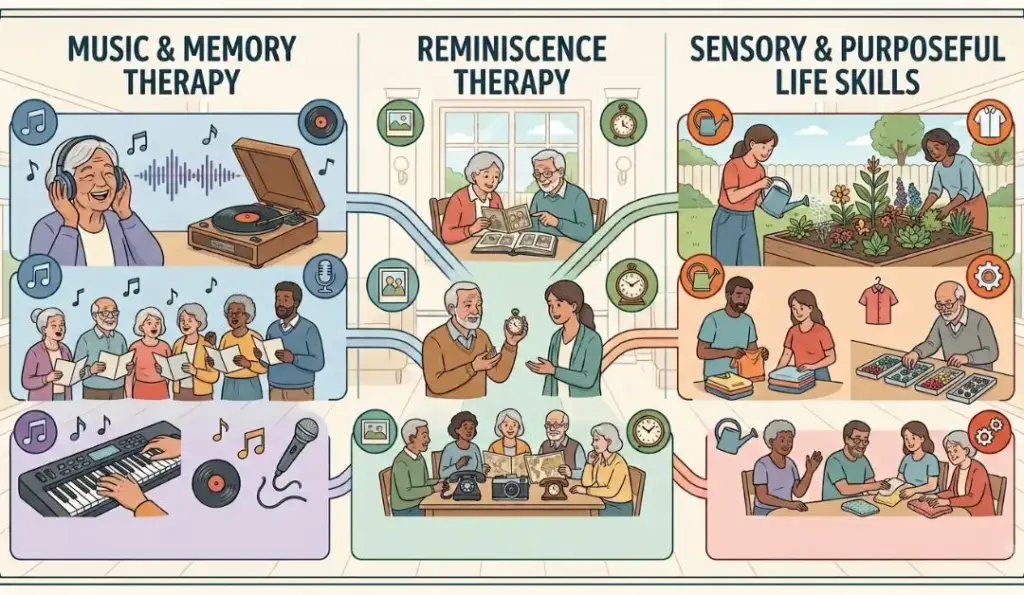
Comprehensive memory care support for seniors utilizes evidence-based, non-pharmacological therapies designed to stimulate recall and build emotional security:
- Music & Memory Therapy: Tapping into musical memories can access long-term brain centers that remain intact long after short-term memory fades. Listening to familiar tunes often sparks spontaneous smiles, humming, and verbal conversation.
- Reminiscence Therapy: Using tactile photo albums, vintage keepsakes, and familiar scents helps seniors share stories from their youth, fostering pride and emotional connection.
- Sensory & Purposeful Life Skills: Supervised gardening, baking, sorting crafts, and aromatherapy provide a genuine sense of productivity and accomplishment.
Cognitive decline progresses differently depending on the underlying cause. Recognizing early dementia symptoms and progression allows families to prepare for changing daily care needs.
Decision Guide: When Is It Time for Memory Care?
If you are evaluating whether your loved one requires the benefits of memory care, consider these common indicators:
- Wandering or Disorientation: Getting lost in familiar surroundings or attempting to leave home unassisted.
- Home Safety Hazards: Leaving stoves burning, forgetting to lock doors, or mismanaging household appliances.
- Declining Hygiene & Nutrition: Unexplained weight loss, missing meals, or resistance to bathing and grooming.
- Caregiver Burnout: Family caregivers experience physical illness, chronic sleep deprivation, or severe stress.
- Heightened Evening Confusion: Noticeable shifts in mood, agitation, or paranoia during late afternoon or evening hours.
Frequently Asked Questions
Q1: What is the main difference between assisted living and memory care?
Answer: While assisted living supports seniors who are cognitively intact but require help with daily chores and personal care, memory care provides secured 24/7 environments, dementia-trained staff, anti-wandering technology, and specialized cognitive enrichment tailored specifically for progressive memory loss.
Q2: Can memory care help slow down dementia progression?
Answer: While neurodegenerative diseases currently have no medical cure, structured memory care programs can slow the rapid decline of daily functional abilities. Establishing calm routines, proper nutrition, supervised physical movement, and regular cognitive therapy significantly reduces cognitive fatigue and distress.
Q3: How do memory care caregivers manage agitation and behavioral changes?
Answer: Memory care professionals receive specialized training in de-escalation, validation therapy, and gentle redirection. Rather than correcting or arguing with a resident’s altered perception of reality, caregivers validate their emotional state and redirect their attention toward comforting, soothing activities.
Experience Compassionate Memory Care Guidance
Every senior facing memory loss deserves a safe, fulfilling environment built around their personal history, strengths, and physical needs. Evaluating memory care options can feel overwhelming, but you do not have to make these decisions alone.
At New Day Lifestyle for Seniors, we guide families through every step of evaluating and choosing senior care solutions. If you need local insight or personalized guidance, our specialized McKinney memory care placement services will help you to find a safe, supportive community where your loved one can truly thrive.
Ready to discuss your family’s options? Contact our compassionate senior care team today for expert guidance and personalized support.