
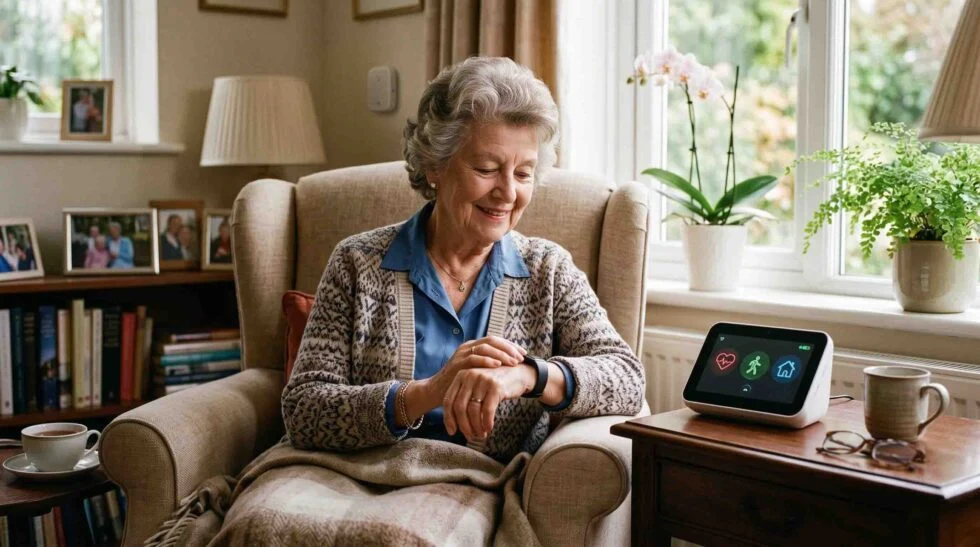
Senior monitoring systems are devices or services that help detect falls, emergencies, or changes in an older adult’s daily routine, then alert a family member or a professional monitoring center. They range from simple wearable help buttons to in-home sensors that quietly track activity patterns. The best senior monitoring system depends on the person’s health risks, how independent they are, and whether the family needs occasional check-ins or 24/7 monitoring.
Falls are the leading cause of injury among adults 65 and older, and more than 14 million older adults, roughly 1 in 4, report falling each year, according to the CDC. That’s the reality driving most families toward this search in the first place: either a fall already happened, or everyone can see one might.
Senior Safety Information Reviewed By: New Day Lifestyle for Seniors Editorial Team | Last Updated: 2026
What Is a Senior Monitoring System?
A senior monitoring system, sometimes called an elderly monitoring system, is any device or service designed to keep track of an older adult’s safety, health, or daily activity and alert someone when something seems wrong. That definition covers a wide range of technology, from a $20-a-month help-button pendant to a network of motion sensors that learns a person’s routine and flags unusual changes.
Most systems fall into one of these categories:
- Medical alert pendants and wristbands : A wearable button that connects to a monitoring center or a family member with the press of a button.
- Fall detection devices : Wearables with built-in sensors (accelerometers) that can automatically detect a hard fall and send an alert, even if the wearer can’t press a button.
- GPS-enabled mobile devices : For seniors who are still active and leave the house, providing location tracking and two-way communication if they become disoriented or need help away from home.
- In-home sensor systems : Passive sensors placed around the house that monitor movement, activity patterns, and daily routines without requiring the person to wear anything.
- Video and camera-based monitoring : Cameras that allow a family member (or a monitoring service) to check in visually, often with motion alerts.
- Voice-activated systems : Smart speaker-based options that let a senior call for help hands-free, without wearing a device at all.
Families rarely need every category at once. The right combination depends on the person’s specific risks, which is really the central question this whole decision comes down to.
Senior Monitoring Devices: Comparing the Main Types
| Device Type | How It Works | Best For | Typical Monthly Cost Range* |
|---|---|---|---|
| Medical alert pendant (button-press) | Wearer presses a button to reach a monitoring center or contact | Seniors who are alert and able to press a button after a fall or emergency | Lower end of the range |
| Fall detection wearable | Automatically senses a hard fall using motion sensors, no button press required | Seniors with a history of falls, balance issues, or those who live alone | Mid-range, often with an added monthly fee |
| GPS mobile alert device | Combines emergency alert with location tracking, works outside the home | Active seniors who go out, walk, or have mild wandering risk | Mid-to-higher end of the range |
| In-home sensor system | Passive sensors track movement and routine, alert on unusual inactivity | Seniors who resist wearing a device, or families wanting general routine monitoring | Varies widely by system |
| Video/camera monitoring | Live or recorded video, often with motion alerts | Families who want visual confirmation, not just an alert | Varies widely; some are one-time equipment cost plus subscription |
*Monthly costs for monitoring services generally range from about $25 to $80 depending on the provider, device type, and whether fall detection or GPS is included. Always confirm current pricing directly with a provider, since plans and fees change.
Fall Monitor for Elderly Parents: What Fall Detection Actually Does
A fall monitor for elderly users is usually a wearable device , a pendant, wristband, or smartwatch, with built-in motion sensors that can detect the sudden, sharp movement pattern of a hard fall (like tripping or slipping) and automatically trigger an alert, without the wearer needing to press anything.
A few important realities families should understand before choosing one:
- Fall detection isn’t 100% accurate. No sensor perfectly distinguishes every fall from every quick movement, and false alarms can happen. Independent testing organizations have found detection rates for hard falls vary meaningfully by device and manufacturer.
- “Soft falls” are harder to detect. A slow slide to the floor (from fainting or gradually losing balance) doesn’t always trigger the same sensor pattern as a hard, sudden fall, so some devices catch these less reliably than dramatic falls.
- The device only helps if it’s worn. A fall monitor left on a nightstand, including in the shower, a common fall location, can’t detect anything. If your loved one is likely to remove a pendant at certain times, that’s worth factoring into the decision.
- Response time matters. Ask any provider you’re considering how quickly a real monitoring center, not just an automated app alert, responds once a fall is detected.
Because falling once roughly doubles a person’s risk of falling again, according to CDC data, a fall monitor is often one of the highest-value additions for a senior who has already had one fall, even a minor one.
Home Monitoring System for Elderly Parents Living Alone
A home monitoring system for elderly parents typically refers to passive, in-home sensor technology rather than a wearable, designed for families who want a general sense of a parent’s daily routine without requiring the senior to wear or operate anything.
These systems commonly include:
- Motion sensors placed in key rooms (kitchen, bathroom, bedroom) that track general activity patterns over time.
- Door and entry sensors that can alert a family member if a door opens at an unusual hour, useful for both safety and, in some cases, dementia-related wandering concerns.
- Routine-based alerts : For example, a notification if there’s been no kitchen or bathroom activity by a certain time in the morning, which can indicate a problem before anyone calls to check.
- Two-way voice or video check-in : In systems that combine sensors with a communication component.
The main appeal of home monitoring is that it works in the background, no button to remember, nothing to wear or charge. The trade-off is that these systems generally detect changes in routine rather than an emergency in the moment, so they’re often paired with a wearable fall detector rather than used as a complete replacement for one.
How to Choose the Best Senior Monitoring System
There’s no single best senior monitoring system, the right choice depends on the specific person’s needs, not a universal ranking. Use this framework to narrow the decision:
- Has fallen before, or has a diagnosed fall risk → prioritize a fall detection wearable with automatic sensing, not just a manual help button.
- Lives alone and has no one checking in daily → consider adding an in-home sensor system for routine monitoring, alongside a wearable.
- Is still active, drives, or goes for walks → a GPS-enabled mobile device matters more than an in-home-only system.
- Has early memory loss or wandering risk → look at systems with door/exit sensors and GPS, and start a conversation with their doctor about the stage of care they may need.
- Resists wearing any device → an in-home sensor or voice-activated option may get more consistent real-world use than a pendant that gets left in a drawer.
- Needs more than monitoring, daily hands-on help → a monitoring device isn’t a substitute for personal care; this is often the point to start exploring in-home care or a residential care setting.
A few practical questions to ask any provider before choosing:
- Is monitoring routed to a professional call center 24/7, or only to family contacts?
- What is the average response time once an alert is triggered?
- Is there a cancellation fee or long-term contract?
- Does fall detection cost extra, and what’s the total monthly price with it included?
- Is the device water-resistant enough to wear in the shower, where many falls happen?
Does Medicare or Medicaid Pay for Senior Monitoring Systems?
Generally, Original Medicare does not cover personal emergency response systems (medical alert devices) or in-home monitoring technology, because they’re not classified as durable medical equipment in the way a wheelchair or hospital bed is. Some Medicare Advantage plans offer this as a supplemental benefit, so it’s worth checking directly with a specific plan.
Medicaid rules vary by state, and some state Medicaid waiver programs (particularly those supporting seniors who want to remain at home rather than move to a nursing facility) do include coverage for personal emergency response systems as part of a home- and community-based services benefit. Eligibility and covered services differ significantly by state, so this is worth confirming directly with your state’s Medicaid program.
When Monitoring Isn’t Enough: Recognizing the Next Step
A monitoring system is a valuable safety net, but it’s important to be honest about what it can and can’t do. It can alert someone that a fall happened, it can’t prevent the fall, and it can’t provide the daily hands-on help a senior may eventually need with bathing, dressing, meal preparation, or medication management.
Signs that monitoring technology alone may no longer be enough include:
- Multiple falls despite having a monitor in place.
- Increasing confusion, missed medications, or unsafe wandering.
- A caregiver who is consistently overwhelmed trying to respond to alerts.
- A senior who needs help with daily activities, not just emergency response.
If any of this sounds familiar, it may be time to look beyond monitoring technology and start exploring senior care options that provide more consistent, hands-on support, whether that’s in-home care, a smaller residential care home, or a community built around a higher level of daily assistance.
How New Day Lifestyle for Seniors Can Help
Choosing a monitoring device is often just the first step families take, and sometimes it’s the moment that reveals a bigger need. At New Day Lifestyle for Seniors, we help families throughout McKinney, Texas, and the greater Dallas–Fort Worth area figure out what level of support actually fits a loved one’s situation, whether that means staying at home with the right safety tools in place or exploring residential care options when monitoring alone isn’t providing enough support. Our guidance is free to families, and we’re happy to talk through where your loved one’s needs currently sit, no pressure, no sales pitch, just an honest conversation about what’s next.
Frequently Asked Questions
1. What is the best senior monitoring system?
There isn’t one universal “best” system, the right choice depends on the person’s fall risk, activity level, memory status, and whether they’ll consistently wear a device. A senior with a history of falls generally benefits most from automatic fall detection, while an active senior who leaves the house may need GPS more than in-home sensors.
2. What’s the difference between a senior monitoring system and a fall monitor for elderly parents?
“Senior monitoring system” is the broader category, covering wearables, in-home sensors, GPS devices, and video monitoring. A “fall monitor” specifically refers to a device with built-in motion sensors designed to automatically detect a fall and send an alert, which is one type of senior monitoring device among several.
3. How much do senior monitoring devices cost?
Monthly costs for most senior monitoring devices generally range from about $25 to $80, depending on the provider, whether fall detection or GPS is included, and any equipment fees. Always confirm current pricing directly with a provider.
4. Does Medicare cover senior monitoring systems?
Original Medicare generally does not cover personal emergency response systems or home monitoring devices, since they aren’t classified as durable medical equipment. Some Medicare Advantage plans offer this as a supplemental benefit, so it’s worth checking with a specific plan directly.
5. Does Medicaid cover a home monitoring system for elderly parents?
It depends on the state. Some state Medicaid home- and community-based services waiver programs cover personal emergency response systems for seniors trying to remain at home, but eligibility and covered services vary significantly by state.
6. How reliable is fall detection technology?
Fall detection is helpful but not perfect, detection accuracy varies by device and manufacturer, and “soft falls” (a slow slide rather than a sudden impact) can be harder for sensors to catch than a hard fall. A device only works if it’s actually being worn, including in higher-risk areas like the shower.
7. Can a home monitoring system replace in-person caregiving?
No. A home monitoring system for elderly parents can alert someone that help is needed, but it doesn’t provide hands-on assistance with daily activities like bathing, dressing, or medication management. If those needs are growing, it may be time to consider in-home care or a residential care setting.
8. Do I need both a wearable device and an in-home sensor system?
Not necessarily, but many families do use both, a wearable for emergency and fall detection, and in-home sensors for general routine monitoring, especially if the senior lives alone. The right combination depends on the specific risks involved.
9. What should I ask before choosing a senior monitoring device?
Ask whether alerts go to a 24/7 professional monitoring center or only to family contacts, what the average response time is, whether fall detection costs extra, whether there’s a long-term contract, and whether the device is water-resistant enough for the shower.
10. What if my loved one refuses to wear a monitoring device?
This is common. In-home sensor systems or voice-activated options can provide some level of monitoring without requiring anything to be worn. If refusal continues and safety concerns are significant, it may be worth having a broader conversation about whether staying at home alone is still the safest option.
Sources & References
- https://www.cdc.gov/falls/data-research/facts-stats/index.html
- https://www.cdc.gov/falls/data-research/index.html
- https://www.cdc.gov/falls/about/index.html
- https://www.medicare.gov/coverage/durable-medical-equipment-dme-coverage
- https://www.medicaid.gov/medicaid/home-community-based-services/home-community-based-services-authorities/home-community-based-services-1915c