
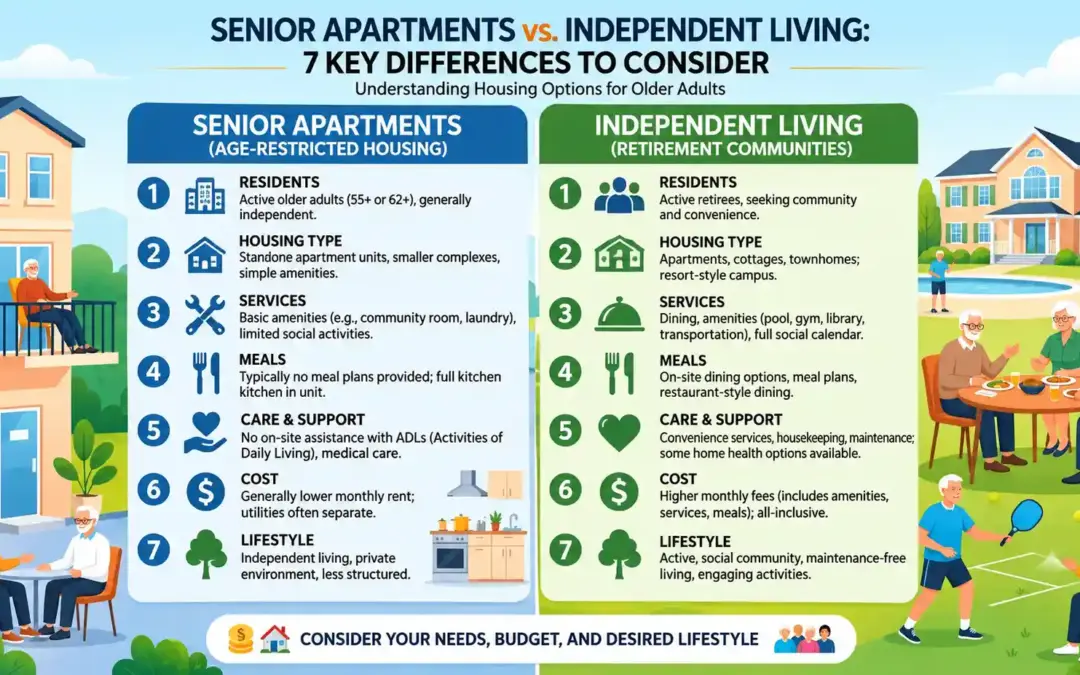
Choosing between senior apartments and an independent living community involves more than comparing apartment layouts or monthly rent. The two options can differ in the services included, everyday responsibilities, eligibility requirements, social opportunities, and lease arrangements.
For older adults considering independent living options, understanding these differences can help narrow the choices. The right option depends on how much support a person wants with household tasks, which amenities matter to them, and how they prefer to spend their time.
Here are seven important factors to compare before making a decision.
1. Monthly Expenses and What’s Included
The monthly cost is often one of the first things families compare. However, the advertised rent or monthly fee may not cover the same expenses at every property.
With a senior apartment, the monthly payment may primarily cover the apartment itself. Residents may need to budget separately for utilities, meals, housekeeping, transportation, and other services, depending on the rental agreement.
Independent living communities may offer packages that include some combination of meals, housekeeping, transportation, activities, and maintenance. These services can be part of the monthly fee or available at an additional charge.
Before comparing prices, ask each property for a written breakdown of:
- Monthly rent or community fee
- Utilities, internet, and cable
- Meal plans and additional dining costs
- Housekeeping and laundry services
- Transportation fees
- Parking, pet, and other recurring charges
- Move-in fees, deposits, and annual increases
A lower advertised price does not always mean a lower overall monthly expense. When comparing properties, consider the services you would actually use and the total amount you would pay. Factors such as monthly fees, included services, and additional expenses can affect independent living costs from one community to another.
2. Daily Responsibilities and Household Management
How much responsibility an older adult wants to keep is another important consideration.
In a senior apartment, residents may handle most everyday household tasks themselves. This can include grocery shopping, preparing meals, cleaning, laundry, arranging repairs, and managing appointments. Some properties offer optional services, but availability varies.
Independent living communities may reduce some of these responsibilities through scheduled housekeeping, dining options, maintenance assistance, or transportation. The exact services depend on the community and the selected living arrangement.
Consider the person’s current routine:
- Do they enjoy cooking and grocery shopping?
- Can they comfortably manage cleaning and laundry?
- Would help with household maintenance make daily life easier?
- Would they prefer to spend less time managing chores?
Someone who enjoys managing their own home may appreciate the flexibility of an apartment. Someone who wants fewer household responsibilities may prefer a community with more services included.
3. Dining, Housekeeping, and Transportation
The availability of everyday services can make a noticeable difference in convenience.
Some senior apartment properties have shared spaces, community events, or optional services, but residents should not assume that meals, housekeeping, or transportation are included.
Independent living communities may offer scheduled dining, housekeeping, laundry, and transportation for appointments or local errands. However, the frequency, availability, and cost of these services vary.
Ask specific questions rather than relying on a general list of amenities:
- Are meals included every day, or are meal plans optional?
- Can residents prepare their own meals?
- How often is housekeeping provided?
- Is laundry handled in the apartment or through a shared facility?
- Does transportation require reservations?
- Are there additional charges for individual services?
The answers will help you understand how much day-to-day planning the resident will still need to manage.
Available services and shared facilities can differ significantly between properties. Comparing senior living community amenities can help families identify which features and services matter most.
4. Social Activities and Opportunities to Connect
Social opportunities can influence how comfortable someone feels after moving.
Senior apartment communities may have common rooms, shared outdoor spaces, or resident-organized gatherings. The amount of organized programming can vary considerably from one property to another.
Independent living communities may offer scheduled activities such as group outings, fitness classes, hobby groups, games, educational programs, and social events. Some also provide shared dining spaces where residents can meet regularly.
Neither option guarantees that someone will develop friendships or participate in activities. The atmosphere and available programs matter.
When comparing properties, ask:
- How often are group activities scheduled?
- Are activities included in the monthly fee?
- Can residents suggest or organize their own events?
- Are transportation arrangements available for group outings?
- Are common areas open throughout the day?
If possible, visit during an activity or meal period. This gives you a better sense of the community’s atmosphere than an empty apartment tour.
5. Apartment Layouts, Accessibility, and Privacy
The apartment itself should suit the resident’s preferences and everyday needs.
Both senior apartments and independent living communities may offer studio, one-bedroom, or two-bedroom layouts. However, available floor plans, storage, kitchen facilities, and accessibility features differ by property.
During a visit, check:
- Whether the entrance is step-free
- Whether elevators are available when needed
- Bathroom layout and ease of access
- Doorway and hallway space
- Lighting and flooring
- Kitchen design and appliance access
- Closet and storage space
- Balcony, patio, or outdoor access
Also consider privacy. Some residents prefer a full kitchen and a more traditional apartment setup, while others are comfortable with a smaller kitchen because they plan to use community dining.
Do not assume that a property has a particular accessibility feature because it markets itself to older adults. Ask what is available in the specific unit being considered.
6. Age Requirements, Income Limits, and Eligibility
Eligibility requirements can vary significantly, particularly among senior apartment properties.
Some age-restricted housing follows federal rules for communities designed for people aged 55 and older. Under the Housing for Older Persons Act, qualifying 55-and-older housing generally must have at least 80% of its occupied units occupied by at least one person aged 55 or older and meet additional requirements. This does not mean every resident or every unit must follow the same age rule. HUD’s federal regulation explains the occupancy requirements.
Other properties may use different age requirements or have no age restriction. Always confirm the property’s written policy.
Income limits are another important distinction. Some affordable senior housing programs restrict eligibility based on household income and local area median income. For example, HUD’s Section 202 program generally requires at least one adult household member to be 62 or older and household income below 50% of the area’s median income. HUD provides the Section 202 eligibility details.
Market-rate properties may have different financial and application requirements.
Before applying, ask:
- What is the minimum age requirement?
- Is there an income limit?
- Are assets or other financial details reviewed?
- Is the property part of an affordable housing program?
- Is there an application fee or waiting list?
- Which documents are required?
These questions can prevent families from spending time on properties for which the applicant does not qualify.
7. Lease Agreements, Community Rules, and Flexibility
The rental agreement can affect both monthly expenses and the resident’s freedom to make changes.
Senior apartment properties generally use residential rental agreements. Independent living communities may also use leases or other residency agreements, depending on the operator and services offered.
Read the agreement carefully before signing. Pay attention to:
- Lease length and renewal conditions
- Notice required before moving out
- Deposit and refund policies
- Guest and visitor rules
- Pet policies and related fees
- Parking arrangements
- Restrictions on apartment changes
- Charges for optional services
Ask whether service fees can change separately from the housing payment. If meals or housekeeping are included in a package, find out whether residents can opt out or change their selections.
A clear understanding of the agreement can help avoid unexpected expenses or restrictions later.
Can Someone Move From Senior Apartments to Independent Living Later?
Yes. An older adult may move from a senior apartment to an independent living community if their preferences or housing needs change and they meet the new property’s requirements.
For example, someone who initially prefers managing meals, cleaning, and errands may later want a setting with dining options, scheduled activities, or fewer household responsibilities.
Before making a move, compare the new monthly expenses, available services, lease terms, location, and moving costs. Also consider whether the new apartment will suit the person’s needs over the next few years.
If the person begins needing regular help with bathing, dressing, medication management, or other personal care tasks, independent living may not provide the support required. In that situation, understanding the different levels of care available for older adults can help families consider other senior living arrangements.
Questions to Ask Before Choosing Either Option
Use these questions when speaking with property managers or visiting communities:
- What is included in the monthly payment?
- Which services cost extra?
- Are there age or income eligibility requirements?
- What floor plans and accessibility features are available?
- What meals, housekeeping, and transportation options are offered?
- What activities take place, and how often?
- What are the lease, renewal, and move-out policies?
- Are there additional fees that may not appear in the advertised price?
Writing down the answers makes it easier to compare multiple properties without relying on memory. Preparing questions to ask during an independent living tour can also help families evaluate properties more consistently.
Which Option May Be the Better Fit?
Senior apartments may suit older adults who want a more traditional rental arrangement, prefer handling their own household responsibilities, and are comfortable arranging services independently.
Independent living may be worth considering for someone who wants fewer chores, convenient dining options, organized activities, or access to community services.
No single choice works for every older adult. The decision should reflect the person’s budget, preferred routine, desired level of convenience, location preferences, and eligibility.
Frequently Asked Questions
1. Are senior apartments cheaper than independent living?
Senior apartments may have lower monthly rent, but residents often pay separately for meals, housekeeping, and other services. Compare total monthly expenses before deciding.
2. Do senior apartments include meals and housekeeping?
Some properties offer these services, but they are not always included in the rent. Confirm which services are available and whether additional fees apply.
3. What is the difference between senior apartments and independent living amenities?
Senior apartments may offer basic shared spaces and resident activities. Independent living communities may provide additional amenities such as dining, housekeeping, transportation, and organized social programs.
4. Do senior apartments have age or income requirements?
Some senior apartments have minimum age requirements or income limits, particularly affordable housing properties. Requirements vary by property, so check eligibility before applying.
5. Can couples live together in senior apartments or independent living?
Yes, many properties accommodate couples, but occupancy rules, age requirements, and apartment availability vary. Ask about eligibility and two-person living arrangements before applying.
Finding an Independent Living Option That Fits Your Needs
Comparing properties can take time, especially when monthly fees, included services, and eligibility requirements differ. Families in North Texas can contact New Day Lifestyle for Seniors for free, no-obligation guidance when considering independent living options.
Our team helps families compare available senior living options based on their preferences, location, and budget, so they can make a more informed decision about the next step.